
 Julie Parsont
 Summer, market, and tradition converge in a peach marmalade that preserves the memory of orchards while adapting to modern practices. Hortense’s technique—blanching to peel without losing the flesh, macerating to extract the aromas, and cooking by observing the texture rather than the clock—serves as the guiding principle. This guide provides precise guidelines: 1 kg of peaches, 700–800 g of sugar, maceration 8–12 hours and sterilization 10 minutes, while also offering alternatives and contemporary resources for comparing methods and cooking times. The pairings range from classic spreads like Bonne Maman’s to savory combinations for marinades, and several online resources facilitate experimentation. Between grandmother’s tips, aromatic variations (vanilla, basil, a hint of Lucien Georgelin) and storage advice, each step is broken down into clear instructions so that the first spoonful evokes a bright summer and the jars keep for several months. At the end of each section, a key tip summarizes the essentials for confidently making successful homemade marmalade in 2025. Peach Marmalade: Essential Ingredients and Fruit Selection The starting point is the market: the selection of fruit largely determines the result. Hortense prefers ripe but still firm peaches to avoid excessive juice and prolonged cooking. The choice of sugar and the addition of an acidic agent like lemon balance the natural setting process and preservation. 🍑
Fruit
: Choose
- 1 kg of peaches ripe but without bruises 🍋 Acidity : Juice of one lemon + zest for color
- 🍚 Sugar :
- 700–800 g depending on the desired firmness 🌿 Flavorings : Vanilla, cinnamon, basil, or a touch of
- Lucien Georgelin 🧾 Inspiration : Compare the traditional and express versions to adapt to your available time
- Ingredient 🍽️ Quantity 🧾 Alternative / Tip 💡
| 🍑 Peaches | 1 kg | Vary the shades of yellow or flat peaches depending on the desired intensity ✨ |
|---|---|---|
| 🍚 Sugar | 700–800 g | Granulated sugar to limit crystallization ❄️ |
| 🍋 Lemon | 1 | (juice + zest) |
| Protects the color and promotes gelling 🛡️ | 🌿 Flavorings As desired | Vanilla bean, cinnamon, or basil to vary the flavor profiles 🌸 |
| To compare proportions and variations, consulting a reference recipe helps in choosing the appropriate technique: a traditional version can be found at | Grandma’s Recipe | , while a well-documented alternative offers a complete guide on |
peach marmalade: the complete guide . Key tip: choose fruits with a balanced sugar and acidity for a naturally flavored marmalade. Discover our complete guide to successfully making your own homemade peach marmalade in 2025. Tips, easy recipes, and advice for a delicious and authentic jam to make at home.
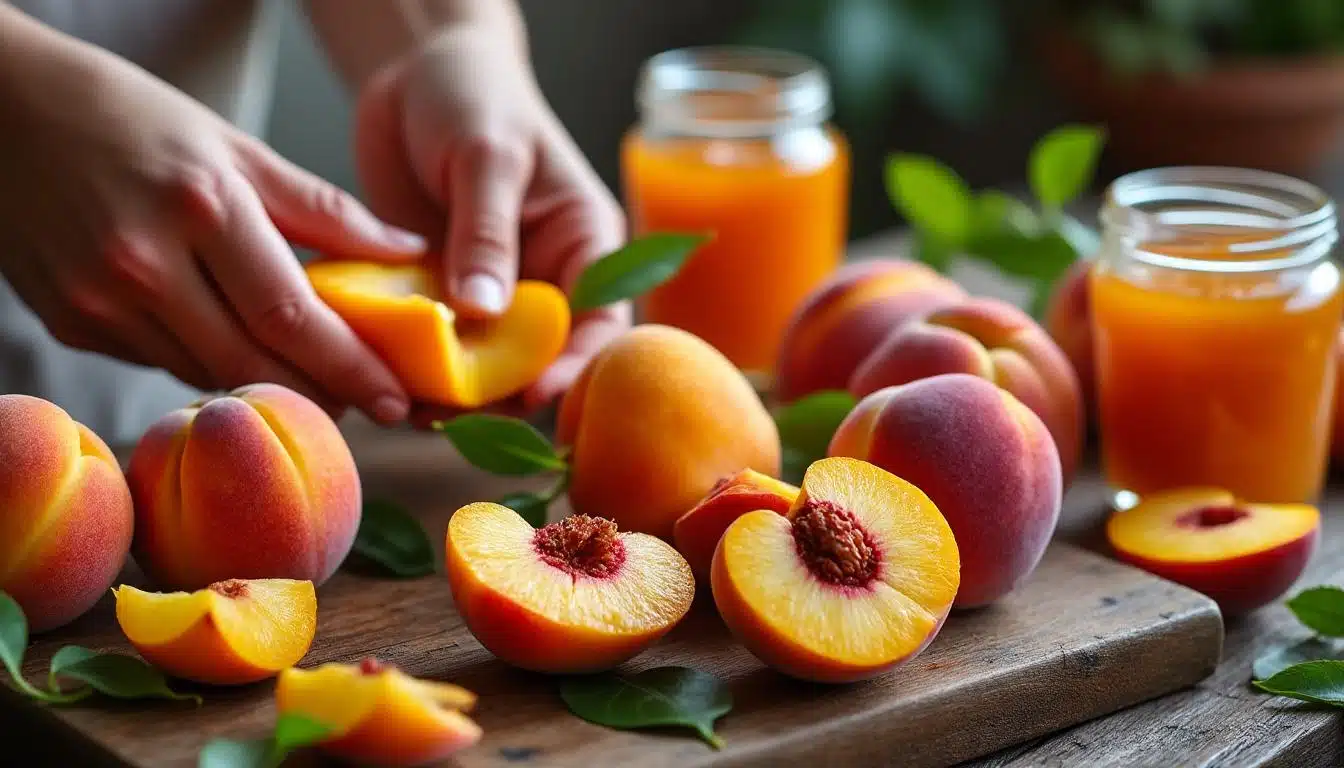
This method combines simple steps with careful observation. Blanching makes peeling easier, macerating extracts flavors, and cooking is adjusted visually and by plate testing to achieve the ideal texture. Several resources offer variations and quick methods to try depending on your equipment.
- 🔥 Blanch for 1–2 minutes, then plunge into ice water ❄️
- ⏳ Maceration: Leave in the refrigerator for 8–12 hours to extract the juices 🍯 🍯 Cooking: Bring to a boil, skim, then simmer for 25–40 minutes depending on consistency 🧪 Cold plate test: A drop should set to indicate it’s done 🔪 Cut into even pieces for consistent cooking
- Step 🔍
- Time ⏱️
- Expected result ✅
| Blanching 🔥 | 1–2 min | Easy peeling, preserved flesh 🍑 |
|---|---|---|
| Maceration ⏳ | 8–12 h | Optimal extraction of aromas and juices 🌙 |
| Cooking 🍲 | 25–40 min | Sets without overcooking, plate test 💡 |
| Skim 🥄 | Regularly | Clear and glossy jam ✨ |
| For a detailed step-by-step method, the technical sheet on | detailed technique | offers variations, while an express version is available at |
Les Cocottes Moelleuses . A concrete example: if the fruit is very juicy, slightly reducing the water in the syrup will shorten the cooking time. Key tip: observation is more important than the timer; the consistency will guide the end of cooking. https://www.youtube.com/watch?v=YB2ZaANHeQUDiscover our complete guide to making perfect homemade peach marmalade in 2025: tips, simple steps, and advice for a delicious jam to share all year round.
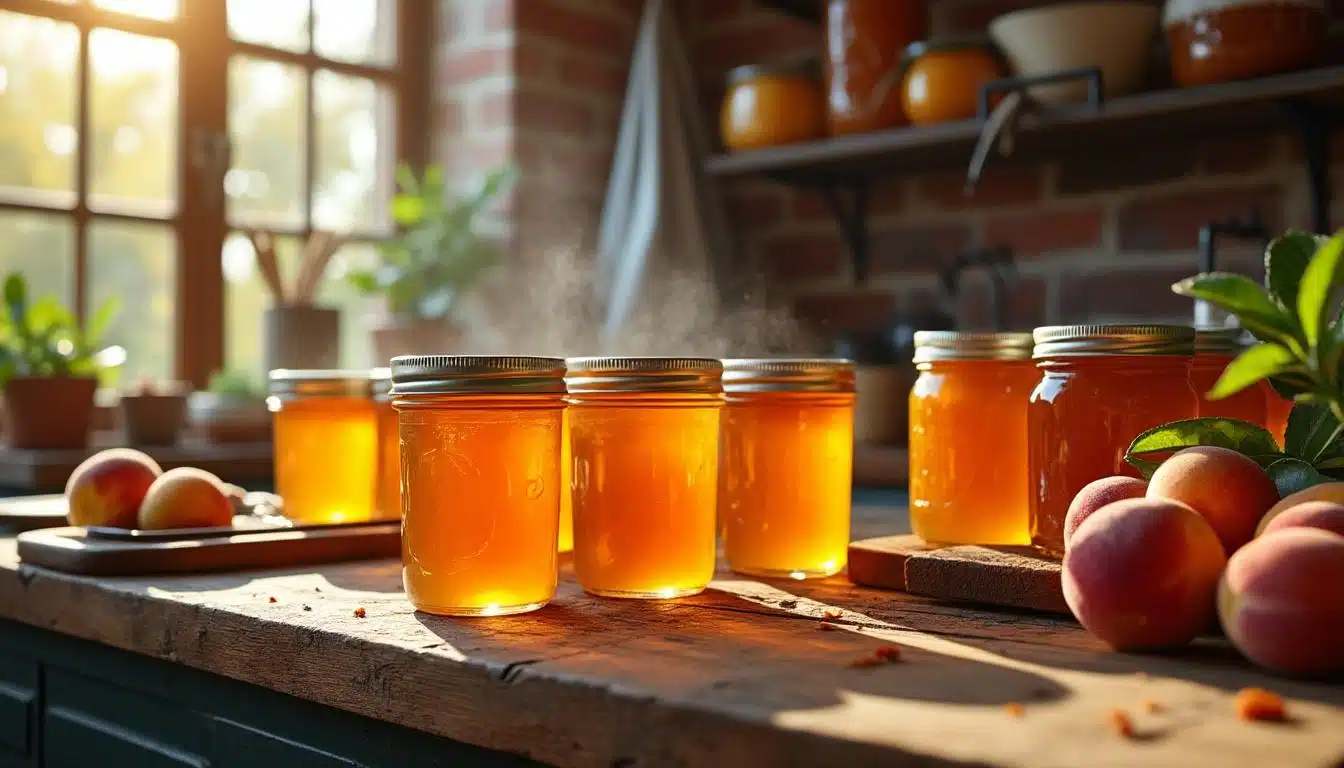
♨️ Sterilization: Immerse jars and lids
- 10 min in boiling water 🫙 Fill while hot, leaving 1 cm of headspace
- 🔁 Turn the jars upside down for 10 min to create a vacuum seal 🎁 Offer a sample jar from the first batch, labeled with name and date 🍽️ Pairings: Toast like
- Bonne Maman
- , fresh cheese with
- L’Épicurien or a sweet and savory marinade inspired byFavols Action 🧰 Duration ⏳ Expected effect 🛡️
| Sterilize | 10 min | Eliminates germs, extends shelf life 🧼 |
|---|---|---|
| Fill while hot | Immediate | Reduces air, limits spoilage 🔒 |
| Turn the jars upside down | 10 min | Creates a vacuum seal, ensures safe storage ✅ |
| Storage | 6–12 month | Away from light and heat 🌡️ |
| Common mistakes and practical solutions are detailed in a dedicated article on | mistakes to avoid | . For market variations and inspiration, take a look at products like |
Andros ,St Dalfour ,Materne ,Francis Miot ,Albert Ménès orReflets de France allows you to compare textures and aromatic intensities. Example of use: a spoonful of marmalade in a white sangria adds a delicate fruity note. Final tip: first test a small flavored quantity (vanilla, cinnamon, or basil) before launching a large production run to define your signature taste. Key tip: proper sterilization and labeling guarantee long-term enjoyment and safety. https://www.youtube.com/watch?v=Rmq4utViimY


